
AI Bedroom Design for Better Everyday Use
Use AI bedroom design to preview colors, bedding, lighting, and storage from your photo. Compare six styles with 3 free 1K designs, without logging in.
Bedroom design should make sleep, storage, and daily routines feel easier. Start with bed placement and the space needed to open drawers and reach closets.
How to Use AI Bedroom Design
Start with a clear reference for your bedroom design, then compare a visual style before choosing real materials. The uploader is on this page, so you can prepare the photo and begin a design without moving to another tool. Use the following steps to make the comparison useful for your own project.
1. Upload a reference that shows the space
Choose a bright, level photograph that includes the main surfaces and fixed features. Avoid a tight detail shot that removes the context. Check the preview before submitting and remove personal documents or other details you do not want in the reference. Keep the original image so you can compare the result with the space you actually have. A photo does not replace the measurements or site information you will need later.
2. Set optional preferences and check the resolution
Generate with the page's preset goal and AI-recommended style, or choose optional room and style preferences. The six style presets are Modern, Scandinavian, Japandi, Farmhouse, Industrial, and Mid-century. You can add up to 500 characters of instructions, such as keeping a sofa or choosing warm wall colors. These preferences guide the whole-image design; there is no brush or mask for selecting specific pixels. Before a purchase, generation is limited to 1K. A plan or credit pack unlocks higher resolutions, with the credit cost displayed before generation. Prepare the reference first, since selecting a photo does not consume credits.
3. Compare the concept with your original
Review colors, finishes, texture, and the overall atmosphere, then check doors, windows, proportions, and other fixed details. The generator aims to retain the structure and viewpoint, but objects and details can change. Record the ideas you want to investigate and set aside inaccurate features. If you compare another style, keep the reference consistent so the differences are easier to understand. Save the result as a visual brief, then verify dimensions and products independently.
Bedroom design: Before & After Concept
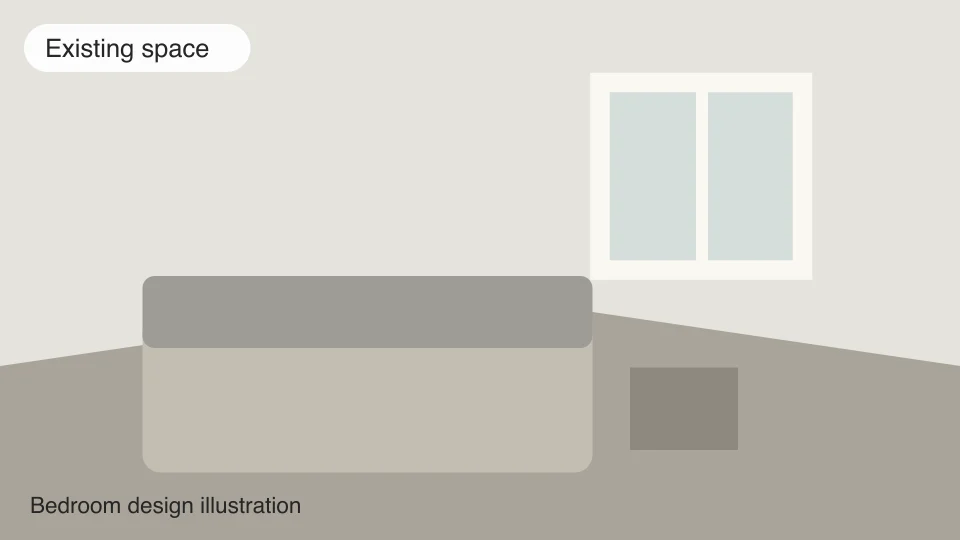
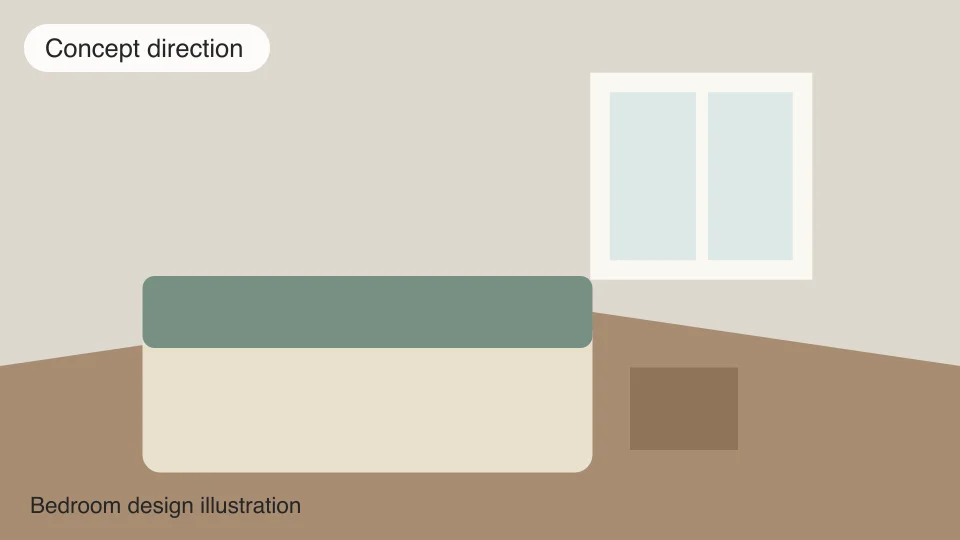
AI Bedroom Design Styles
Compare these six directions against your own bedroom rather than choosing a style from an unrelated inspiration photo.
Modern bedroom design
Use restrained forms, clean lines, and a small set of materials.
Scandinavian bedroom design
Favor daylight, practical storage, pale timber, and soft texture.
Japandi bedroom design
Combine uncluttered shapes with warm natural finishes and calm contrast.
Farmhouse bedroom design
Balance durable surfaces, warm wood, and familiar details.
Industrial bedroom design
Use honest materials and darker accents without sacrificing comfort.
Mid-century bedroom design
Try low profiles, warm wood tones, and purposeful accent color.
Bedroom Design Ideas & Costs
Compare a calm, low-contrast palette with a warmer layered scheme. Place reading light where it is useful rather than symmetrical by default. Use curtains to manage daylight, and choose storage that does not crowd the route around the bed.
A bedroom refresh might need paint, bedding, lamps, and a rug; a larger project could add built-in storage, flooring, or new windows. Mattress and bed-frame dimensions affect the rest of the layout. Plan those fixed items before small decor.
Measure clearances on both sides of the bed and check door swings. Consider blackout needs, outlet locations, and ventilation. A photo concept can guide choices but cannot confirm furniture dimensions.
Set a Bedroom Palette Around Rest and Daily Use
Start with the finishes that will remain, such as the floor, wardrobe, and bed frame. Compare a quieter palette with a more contrasting direction and consider how each would feel under evening lighting. AI bedroom design helps visualize combinations of bedding, wall color, rugs, and furniture finishes in your own space. Examine whether the concept makes a small room seem larger by changing the bed or window proportions. A restful image is useful for discussing the mood, but it cannot guarantee better sleep or tell you how a paint color will look throughout the day.
Keep Bedroom Storage and Movement Practical
Measure around the bed and record which doors, drawers, and wardrobe panels need opening space. In a shared bedroom, think through access from both sides and where each person keeps daily items. A reading lamp and charging point may matter more than decorative symmetry. If a concept adds a desk or a larger wardrobe, test its footprint separately on a sketch. The generator does not calculate clearances or offer a layout editing control. Use its style ideas to compare finishes, while keeping storage capacity and actual routes as independent checks before ordering furniture.
Plan Bedroom Changes in a Useful Order
Choose the largest items first: the bed, wardrobe, and any substantial desk or dresser. Then compare curtains, bedding, and lamps against that framework. Test paint and fabric samples under the room lighting and review curtain dimensions, hardware, and cleaning requirements. A rug should fit the real furniture arrangement rather than the proportions suggested by the concept. For a modest update, keep sound furniture and focus on surfaces you can replace easily. Save a bedroom design you like, but write a separate purchase list with actual sizes, prices, and delivery conditions so the image stays a reference.
Free Credits and Resolution Choices
The anonymous trial includes three free credits, enough for three 1K designs, shared across all the tools on this site. It does not require a login or credit card. After the trial, paid generation requires an account and design credits. Email signup requires verification; use the account links to continue with the available sign-in options.
Generation uses 1 credit at 1K, 3 credits at 2K, or 6 credits at 4K. The uploader shows the selected cost and its free/paid split before you submit. After a successful purchase, your remaining free credits are used first at any unlocked resolution, and paid credits cover the rest. Higher resolution provides more image detail rather than more accurate dimensions or a construction specification. Review the plans and credit options if you need more comparisons, and choose a resolution that suits how you intend to view the concept.
Frequently Asked Questions About AI Bedroom Design
- How do I start with ai bedroom design?
Upload a clear photograph or reference sketch and submit a design with this page's preset goal. Room and style preferences are optional, and you can add up to 500 characters of additional instructions. The generator uses the reference to create a visual concept for your bedroom. Review the result alongside the original: objects, proportions, and details can change, so it is a starting point for comparison rather than a promise of an exact renovation.
- Can I try ai bedroom design without signing in?
Yes. The anonymous trial includes three free credits, enough for three 1K designs, without a login or credit card. These credits are shared across the site rather than renewed for each tool. Selecting a photo does not consume credits. A successful purchase unlocks higher resolutions and uses remaining free credits first; email signup requires email verification.
- What makes a useful reference photo?
Show the whole bedroom or the relevant site from a level viewpoint, with enough light to see fixed features and surface colors. Avoid heavy filters, extreme wide-angle distortion, or close-ups that hide the surrounding space. Remove personal documents and anything you do not want included before uploading. The generator accepts a reference image, not a survey of hidden conditions.
- Can I choose a higher image resolution?
Before purchase, generation is limited to 1K. A successful plan or credit-pack purchase unlocks 1K, 2K, and 4K, with remaining free credits used first and paid credits covering the rest. The total cost and free/paid split are shown before submission. Higher resolution adds image detail; it does not make a design dimensionally accurate or confirm materials, product availability, engineering, or installation costs.
- Can I change just one surface or move a wall?
You can describe preferred wall or floor changes in Additional instructions. Room and style preferences are optional. The generator aims to retain the original structure and viewpoint, but exact object or pixel preservation is not guaranteed. There is no brush or mask control for selecting only one local area.
- Is a bedroom concept a measured construction plan?
No. Check every dimension on site, compare physical samples, and confirm the proposed scope with the relevant professional before buying or building. The image does not inspect wiring, plumbing, structural capacity, drainage, or other hidden conditions. Use a separate measured drawing when dimensions or approvals are needed.
- Can a small bedroom fit more storage?
Often. Compare under-bed storage, taller wardrobes, and slimmer nightstands, then measure openings and circulation before buying.